
Your Program Isn't the Problem, Your Foundation Is.
Why numerous athletes plateau, pick up injuries, and restart, and what's actually missing from their training.

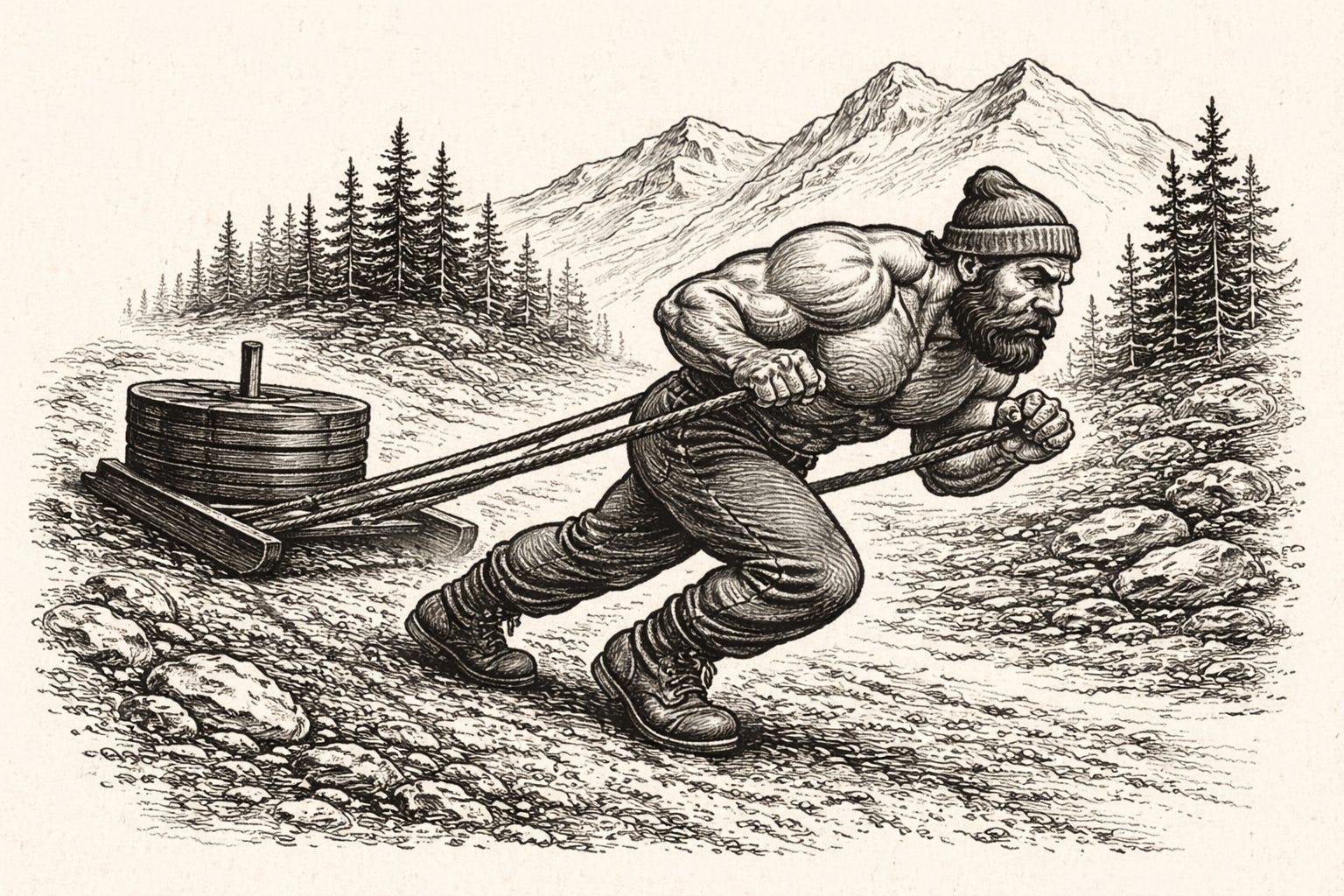
In the era of social media influencers and gurus, short attention spans and the desire for quick fixes, athletes more than ever are jumping right into workouts without ever establishing a foundation to build upon.
While in many cases it’s due to impatience, not wanting to do the boring stuff, or thinking they’re too good for it, in other cases it’s pure ignorance and lack of understanding of the following statement: mastering the mundane, and doing the basics extremely well, is what will ultimately lead to consistent growth and overall success in your athletic endeavors and career.
They could be following a great program on paper. They could be motivated in the moment. And in most cases they genuinely care about getting better, but they don’t want to do the work that will ultimately set them up for success. This is when a couple weeks into a program, progress feels like it’s stalling. A nagging hip flexor shows up. A shoulder that never felt right from the get-go begins to raise its voice. And eventually, a reset. Scrolling social media, looking for the next quick fix to their new problem. Rinse, Repeat.
The problem wasn’t effort. It was never effort. The problem was that they were building on a foundation that didn’t exist.
What I Mean by Foundation
In strength and conditioning, we talk constantly about specific physical qualities, maximal strength, speed, power, endurance. These are the traits most athletes are chasing and the qualities most programs are designed to develop. Legitimate targets. But every single one of them sits on top of something more fundamental.
That something is General Physical Preparedness, or GPP.
GPP isn’t a workout style, it isn’t a training phase, and it isn’t a trend. It’s the baseline physical capacity that determines how well your body can absorb training stress, recover from it, and adapt over time. Think about it as your floor, your base level of fitness, or rather foundation as I said before, that you build upon as your work towards your ceiling.
To break it down in broad categories, there are four components that make up a functional GPP base:
Aerobic Base. The cardiovascular and metabolic foundation that fuels recovery. I’m not talking just between conditioning sessions, but between sets, between training days, and across a full training cycle. A weak aerobic base means your capacity for work and recovery is compromised before you’ve walked into the gym. Don’t be that person who gets winded a couple minutes into a workout or worse, gets winded walking up the stairs.
Structural integrity. The capacity of your connective tissue, joints, and postural system to handle load over time. This is where the mundane work comes in, the high volume accessory work, the hypertrophy work, to build muscle, build stability around your joints, to adapt the muscular and nervous system to high training loads and intensities. You can build strength on top of poor structural integrity for a while, but you can only build up so much before it comes collapsing down.
Work capacity. The amount of work, in this case training volume and intensity you can tolerate while being able to adequately recover and drive positive adaption. This is the big one that will ultimately dictate how high an athletes ceiling in training is.
Movement competence. Being able to perform movement patterns efficiently and correctly in training, with proper joint function and no compensation. This involves each joint being efficient at its primary function, being either mobility or stability, especially under fatigue. If your mechanics break down when you’re tired, you’re not building the adaptations you think you are. You’re building compensation patterns that will show up as injury down the road.
Lacking in any of these components will cost you more than it should and make your training deliver less than it could.
The Stacking Failure Pattern
Here’s a common scenario I hear about in my initial consults with clients when they’re missing that complete foundation of GPP.
An athlete starts a new program with genuine enthusiasm with an end goal in mind. The first few weeks feel productive, there’s novelty, there’s soreness that is often interpreted as a result of a good workout, and their numbers gradually increase initially. Work capacity overall is low, so they barely survive through what should be a normal session. Their aerobic base is underdeveloped, so recovery between sessions is slow and bleed into the next session. Structural integrity hasn’t been built, so quality of movement breaks down and joints are compensating and absorbing load they’re not prepared for.
Weeks in, the effort stays high but the adaptation slows. The athlete’s response is logical, add more. Increase the volume, increase the intensity, add more intense workouts. But the foundation can’t support it because frankly, it was never there to begin with. Recovery suffers over time. A nagging injury surfaces, and they try to train through it or manage it while not addressing the underlying issue.
They are underprepared.
What Foundation Work Actually Looks Like
GPP training isn’t sexy, it’s not a trend, it doesn’t produce the kind of content that gets shared. But it’s the work that makes every other physical quality stick, and without it, everything else is temporary.
In practice it looks like hard physical labor, the grunt work:
Loaded carries. Farmer’s carries, suitcase carries, overhead carries, atlas carries. These build structural integrity, challenge the aerobic system under load, and develop the full-body bracing that transfers to the majority of real life scenarios as well as your training. It doesn’t matter if you are a 9-5er or an elite athlete, you should be strong and efficient as carrying things is different positions. The minimum requirements on many job descriptions of being able to lift 50lbs should be something that you don’t even pay attention to because its automatic.
Sled work. Multidirectional pushes and drags at various loads. No eccentric loading which makes them great for GPP work outside of your main workouts, minimal joint stress, and a great tool for conditioning. People hate sleds, which makes them an underutilized GPP tool that won’t dig into your recovery. They are a necessary evil due to their benefits. Don’t know what I mean? Then you haven’t pushed a prowler sled before.
Tempo aerobic work. Running, cycling, swimming or rowing at a conversational pace for sustained periods. Not a sprint, not a grind, intentional, measured work that builds the aerobic base everything else depends on.
Structural accessory work. Targeted exercises for the posterior chain, hips, hamstrings, shoulder integrity, knee stability, etc. The unglamorous work that keeps joints capable of handling what you’re asking them to do for years, not months.
None of this is complicated. All of it requires consistency and patience, which there seems to be a significant lack of in this day and age.
The Standard, Not the Phase
The biggest misconception about GPP is that it’s a box you check. Run a base phase, build the foundation, then move on to the real training.
That’s not how I program it, and it’s not how I think about it.
GPP is a constant. It is your floor, your base level of fitness. GPP is a standard you maintain year-round. The components shift, emphasis changes based on where you are in your training cycle, or what your goals are, but the baseline never gets abandoned. Because the baseline is what makes everything sustainable over months and years, not just the next six weeks. When you have a strong foundation of GPP, training for any endeavor becomes that much easier because you maintain such a strong base level of overall fitness. Thats the standard I hold with my clients.
And the standard, is the fucking standard.
Every athlete I work with has GPP work in their programs. It’s non-negotiable. If they want to reach their goals and stay healthy throughout their training, they are going to become masters of the mundane, take pride in doing the basics, the grunt work, so that they can adapt to stress overtime without getting shook, cause there any no such thing as half way cro…
No guru hacks, no quick fixes, no bullshit. The foundation is always where we start.
The athletes who last aren’t the ones who trained hardest or do the most work. They are the ones who recognize the importance and have become master’s of the basics. That’s the foundation they build and fall upon when it’s needed.
If this is where you are, training hard, stalling out, managing something that won’t go away, the foundation is probably the conversation we need to have.
Applications for coaching are open. Link below.
See y’all next week.
-Cory Bergman MS, CSCS, TSAC-F
Bergman Performance